
Plan a menu the grill can handle
Start with the number of people and the cooking surface you have. One main item, a vegetable side and a cold side are easier to manage than five foods with different timing. If guests have dietary needs, decide on a separate serving route in advance rather than improvising after raw meat has touched the tongs.
Choose foods that can be prepared before the grill is lit. Wash and cut vegetables in the kitchen, make a salad and put cold food back in the refrigerator. Keep marinades, clean serving plates, a thermometer and spare tongs within reach. If you are grilling away from home, the USDA recommends an insulated cooler with enough cold sources to keep meat at 40°F (4°C) or below until it is ready for the grill.
Do not crowd the grate simply to cook everything at once. Leave room to move pieces away from a flare-up and to reach the food with a thermometer. If the grill is small, cook in planned batches and serve a simple starter while the first one finishes. The meal will feel calmer than a pile of food that all needs turning at the same minute.
Set up the grill outside and follow its instructions
Use the grill in the open air, in the position and with the clearances specified by its maker. The U.S. Consumer Product Safety Commission warns that charcoal must never be burned indoors or in enclosed spaces such as garages, tents or vehicles because it gives off carbon monoxide. Moving a grill just inside a doorway or under an enclosed shelter is not a safe substitute for outdoor use.
Check a gas grill's hose and connections according to the manufacturer's directions before lighting it. Keep children and pets away from the hot cooking area. Put the grill on a stable surface and avoid loose cloth or paper near flames. The CPSC's summer grilling safety guide covers fire and carbon-monoxide risks for gas and charcoal equipment.
Preheat and clean the grate as the manual directs. A clear, organized station helps you keep raw-food tools separate from clean serving tools. Put the serving table far enough from the grill that guests can reach their plates without leaning over the heat.
Keep raw and cooked food apart
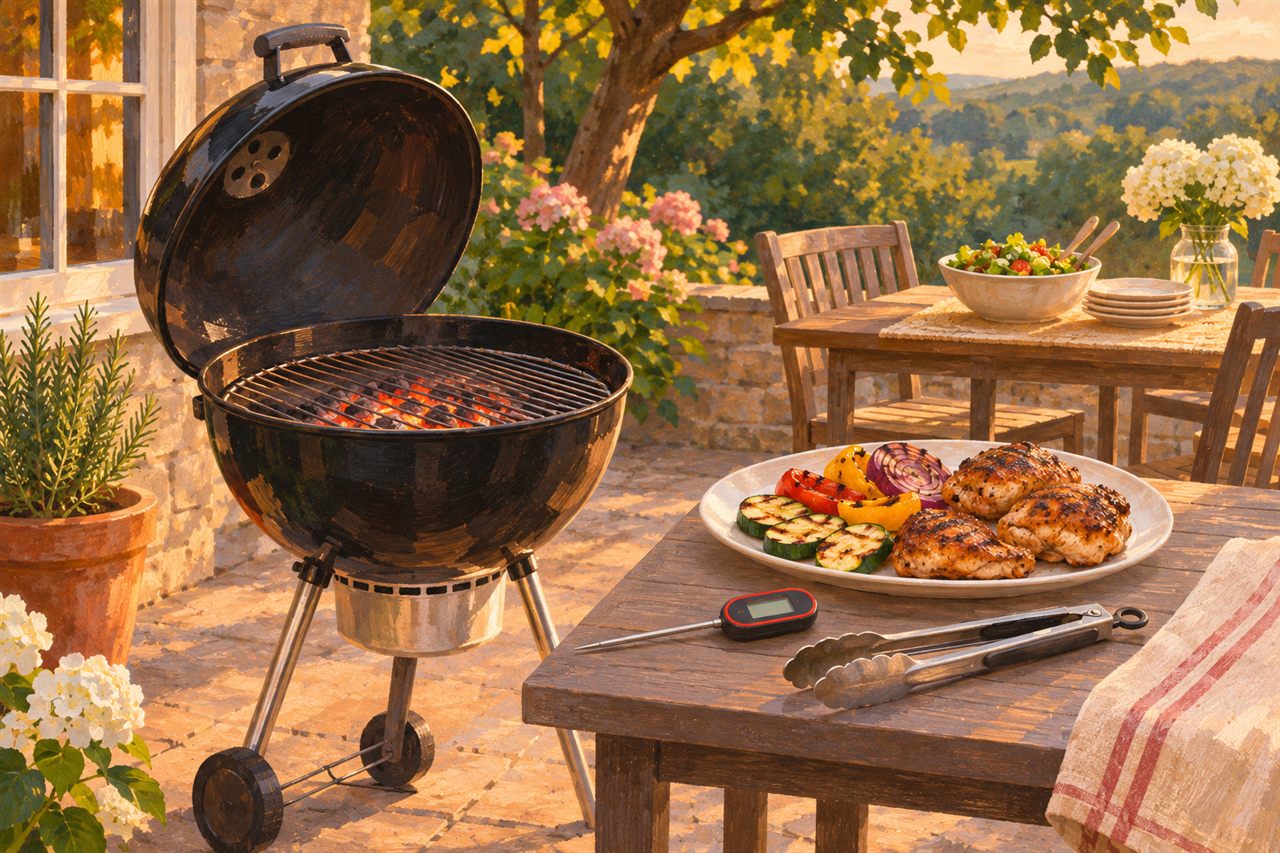
Raw meat and its juices should not touch cooked food, salad or ready-to-eat bread. The FoodSafety.gov clean and separate guidance calls for separate plates and utensils for raw and cooked foods. A simple solution is to mark one tray for the uncooked food and put it away once the food goes onto the grill. Use clean tongs and a fresh platter when removing cooked pieces.
Marinate in the refrigerator, not on a sunny table. If you want a sauce to brush on cooked food, reserve a clean portion before the raw meat goes into the marinade. Wash hands after handling raw food or contaminated packages. If there is no sink near the grill, plan how you will wash properly rather than relying on a quick wipe.
Keep vegetable items apart if you are serving someone who avoids meat or an ingredient because of an allergy. A separate section of the grill or a clean cooking vessel may help, but ask the guest what is suitable. Do not claim a food is free from cross-contact when it has shared a dirty grate or tongs.
Cook for the food, not for the clock
Grill times are estimates. Thickness, starting temperature, hot spots and how often you open the lid can all change the finish. Use a food thermometer in the thickest part, away from bone. The FoodSafety.gov temperature chart lists 165°F (74°C) for poultry, 160°F (71°C) for ground meat, and 145°F (63°C) with a three-minute rest for whole cuts of beef, pork, veal and lamb. Check the chart for the specific food you are preparing.
Color and grill marks do not prove the center is safe. If a piece browns too quickly, move it to a cooler part of the grill and continue cooking until the measured temperature is reached. For mixed batches, check more than one piece. A thin chicken breast and a thick one will not necessarily finish together.
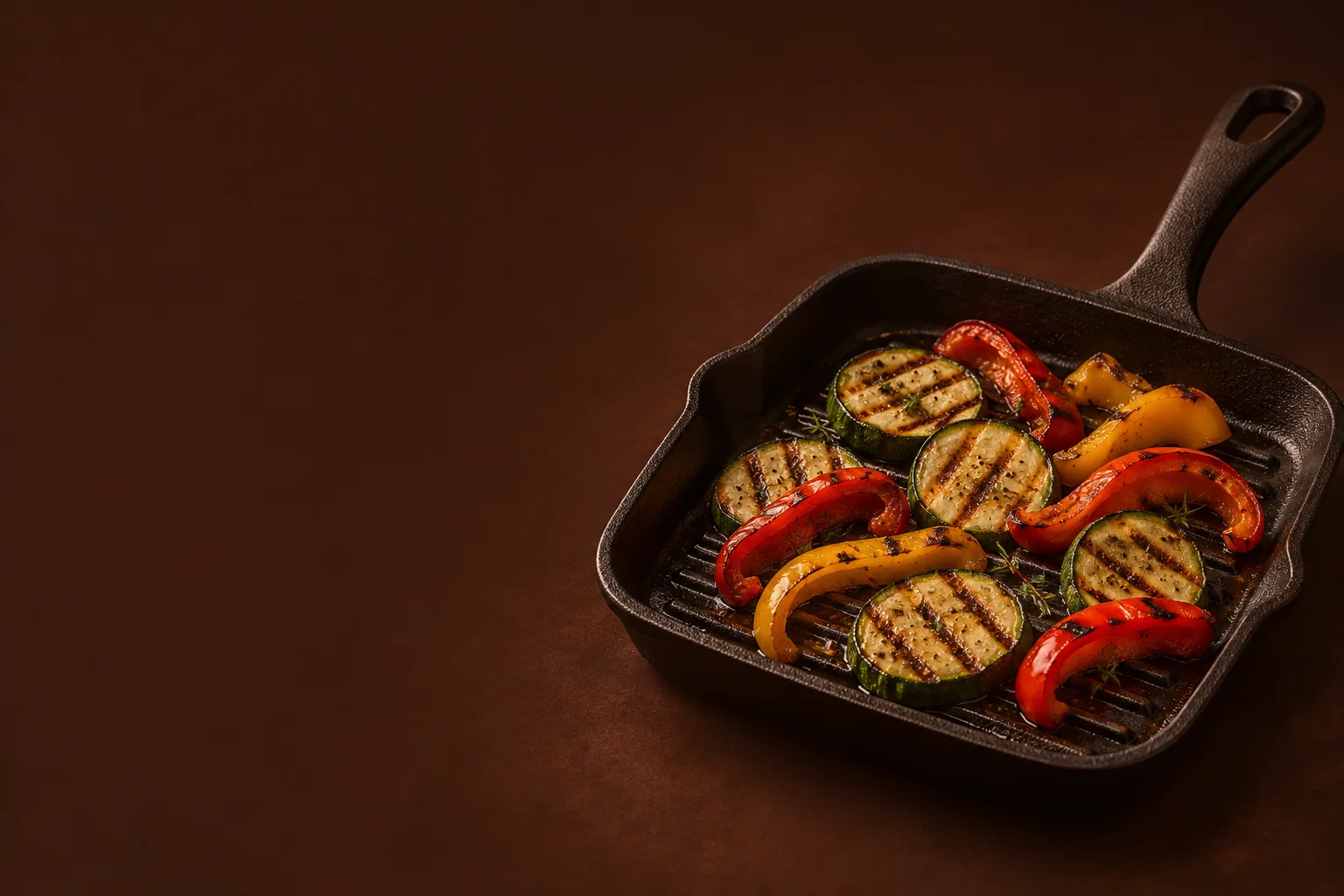
If you cook vegetables, cut them so they can be handled without falling through the grate, or use a suitable basket or pan. Turn them as needed and remove them when their texture suits the dish. Our vegetable preparation guide helps plan those cuts before you light the grill.
Serve in batches and mind the temperature
Keep cold sides cold until serving. Bring out a small bowl of slaw or dip and refill it from the refrigerator, rather than leaving a large dish in the sun for the entire afternoon. The USDA's grilling safety sheet advises discarding perishable food left out for more than two hours, or one hour when the temperature is above 90°F (32°C). It also recommends keeping cooked meat hot until served.
Use clean serving spoons and keep drinks and food on separate tables if space allows. That reduces congestion around the grill. If a batch will wait, use an appropriate hot-holding method; do not assume a covered plate at room temperature will stay safe. Place cooked food on a clean platter and tell guests which items are ready.
Pack leftovers into shallow containers and refrigerate them promptly. Do not return food from a used serving plate to the original storage box. If you are taking food home from a park, bring a cooler and cold sources for the return trip as well.
Finish the cookout safely
Turn off a gas grill as its manufacturer directs. Let charcoal and ash cool completely in the approved place before disposal; do not bring smoldering coals into a garage or building. Keep people away from the hot grate during the meal, especially when they are reaching for seconds.
Clean the grate and tools after they cool. Wash any board or tray that held raw meat with hot soapy water. Check the grill for maintenance before the next gathering rather than discovering a problem when guests arrive. Store fuel and equipment according to their instructions.
Note what worked: how many portions the grill handled, which side dish disappeared and whether the batch timing was comfortable. A short record makes the next barbecue easier. You may decide that one main and two sides were exactly enough.
Barbecue questions
Can I grill frozen meat?
The USDA says some frozen meat can be grilled, but it takes longer and may cook unevenly. Thawing safely first is often easier for a planned barbecue. Follow the recipe and check the internal temperature in several places, especially for thick or irregular pieces.
Are grill marks a sign that meat is done?
No. The surface can brown while the middle is still below the safe minimum. Use a food thermometer and the chart for that specific meat. Rest whole cuts when the chart requires it.
Can I use the same tongs for raw and cooked food?
Use clean tongs for cooked food. Raw juices on utensils can contaminate a food that was cooked safely. Have a second pair ready or wash the first pair thoroughly before using it for serving.
How do I serve cold sides outside?
Keep the main supply refrigerated or in a properly chilled cooler and put out small portions. Replace the bowl rather than topping up one that has sat in the heat. Follow the two-hour rule, shortened to one hour above 90°F (32°C), for perishable food.