
Audit the jobs before choosing machines
Write down the kitchen tasks you repeat in a normal week: boiling water, reheating leftovers, making toast, mixing batter, blending soup or chopping vegetables. Count the times you would use an appliance for each task, then ask what already does it. A hand whisk may handle occasional cake batter; a blender earns its space if smoothies or pureed soup are regular meals.
Consider the full task, including setup and washing. A machine that saves two minutes of chopping but adds four parts to clean may not help in a small kitchen. On the other hand, a microwave that warms a lunch without heating the full oven may be used every day. The right answer depends on your routine, not a universal ranking.
Do not buy a product because a list calls it a 'must have.' Try the task with tools you already own first. If the same step slows you down every week, that is evidence of a useful purchase. If you cannot name a meal you will make with the appliance in the next month, leave it on the wish list for now.
Measure space, power and access
Measure the counter footprint and the clearance above it, including room to lift a kettle lid or pull out an air fryer drawer. Check where the outlet is and whether the cord reaches without crossing a sink, hob or walking route. A compact appliance can still be awkward if its door opens into a wall or it needs empty space around vents.
Decide whether it will live on the counter or in a cupboard. A heavy machine stored behind other pans is less likely to be used. If you need to move it every day, check weight and grip as well as dimensions. Our compact microwave comparison shows how capacity and external measurements differ; measure your dinner plate and the available space before considering a model.
Some cooking products have independent energy labels or certification schemes, but coverage differs by category. The ENERGY STAR electric cooking products page explains what its program covers. Check whether the exact appliance category and model qualify rather than assuming that any small appliance with an efficiency claim has the same certification.
Start with the few jobs you do most
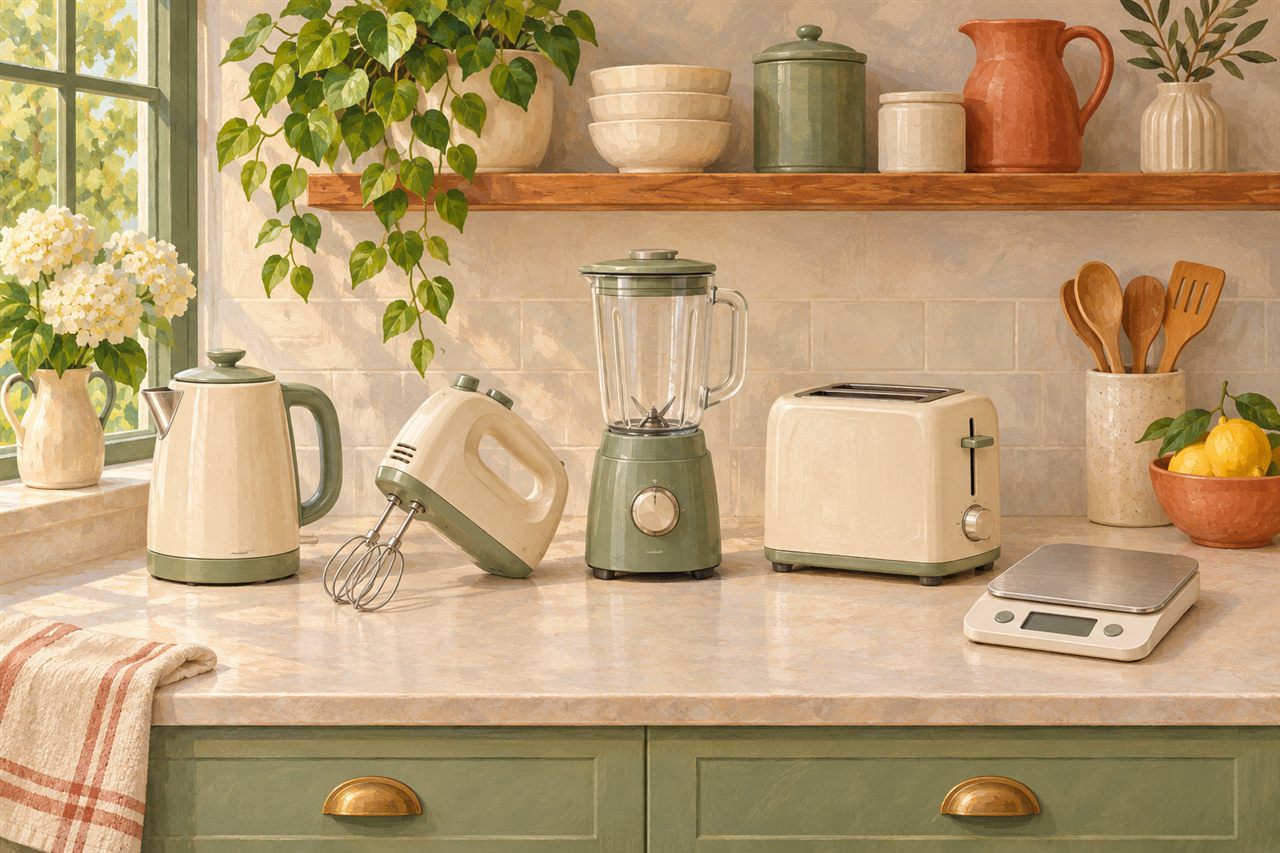
A kettle is useful when you make tea or other hot drinks often, but your hob may already serve that purpose. If you buy one, consider capacity, handle comfort, how it pours and whether you can clean inside it. Our kettle guide compares formats, but confirm the current retailer listing and warranty for a specific model.
A toaster is convenient for frequent toast, bagels or frozen waffles. Check slot length and width against the bread you actually use. A long-slot model may fit an artisan loaf but occupy more counter space. The long-slot toaster comparison covers that trade-off. If you only toast bread occasionally, an oven or grill may be enough.
A microwave can be valuable for reheating and some simple cooking. Check usable interior dimensions, control clarity and cleaning access, not just the printed cubic feet. A scale is small and can help with repeatable baking and coffee; it may be the least demanding way to improve a recipe routine. Buy the tool that solves your frequent task before adding a more elaborate machine.
Treat specialist tools as conditional
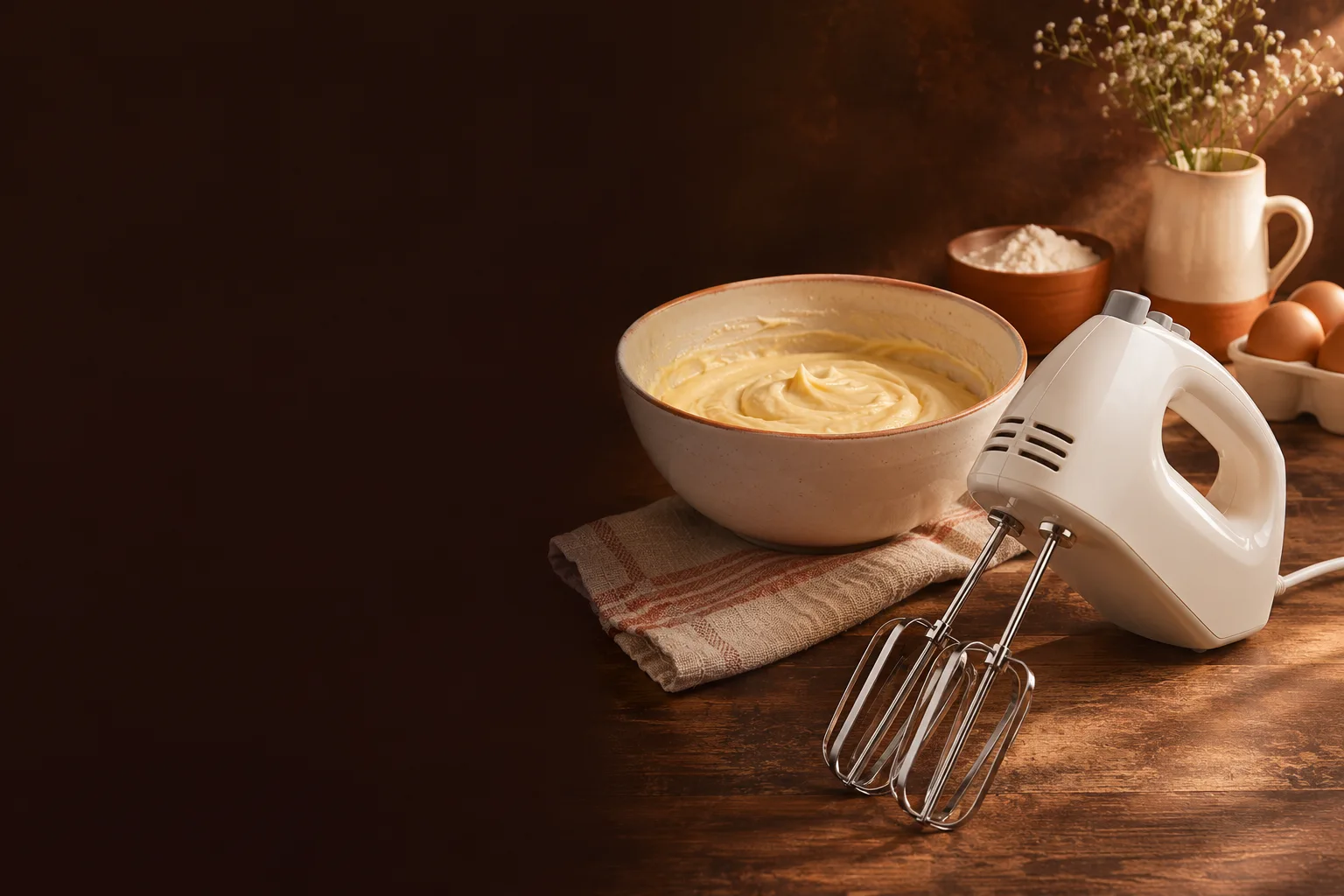
A hand mixer suits someone who bakes regularly and finds long whisking tiring. It is less compelling if the household makes batter twice a year. Compare weight, speed control, beaters and how easily the parts wash. Our hand mixer guide covers those practical features.
An air fryer may fit a household that cooks small, crisp batches often. It is not automatically a replacement for a large oven or a full-size family meal. Look at basket area, safe clearances and cleaning. Our air fryer guide explains the formats, while the beginner recipe guide shows how to learn one basket with a simple dish.
A blender or food processor makes more sense when its specific result is central to your cooking. A handheld immersion blender can be easier to store for soups, while a countertop blender may suit larger batches. Do not treat motor wattage alone as a performance guarantee. Check capacity, the foods allowed by the manual and how the blade assembly is cleaned.
Compare the total cost of ownership
The price on the listing is only the first cost. Check whether filters, specialty bags, liners or replacement parts are required. A machine that uses proprietary consumables may be more expensive to keep than one with a simple reusable vessel. Also consider whether accessories come in the box or are sold separately.
Read the warranty before purchase. The Federal Trade Commission's warranty guide says written terms should be available before you buy and advises keeping the receipt and warranty details. Check who handles repairs, which parts are covered and whether return shipping costs fall to you. An optional service contract is separate from the warranty included with the product.
Look for the exact model number when comparing retailer pages. Similar names can hide different capacities or controls. Do not rely on an old price or a star rating copied from another listing. Save the current product page and check the seller, return policy and delivery terms immediately before ordering.
Check safety and maintenance before committing
Read the manual for electrical setup, ventilation, cleaning and any parts that should not be immersed. The U.S. Consumer Product Safety Commission recall search lets you check whether an exact model has a published recall. A search result is not a substitute for reading the manufacturer's current instructions, but it is a sensible step before buying a used appliance or continuing to use one you have stored for years.
Plan where the appliance will cool after use. A hot air fryer drawer or toaster tray needs a heat-safe place, while a blender blade needs a safe washing routine. If maintenance is complicated, be honest about whether you will do it. A simpler tool used correctly may be a better choice than an advanced one that sits dirty.
When comparing energy use, use product-specific information where available. The U.S. Department of Energy kitchen-appliance guide notes that purchase price and operating cost are separate considerations. Do not assume that the smallest appliance always costs the least for every task; usage and model matter.
Small appliance questions
What should I buy first for a small kitchen?
Choose the tool for the job you do most often and cannot do conveniently with existing equipment. Measure the counter and storage space before shopping. A scale or kettle may be useful to one household; a microwave or toaster may matter more to another.
Is a multi-function appliance always better?
No. It can save space when you genuinely use several functions, but it may be larger, harder to clean or less convenient for a single daily task. Check each mode's usable capacity and accessories, then compare it with the tools you already own.
Should I buy the highest-wattage model?
Wattage is one specification, not a complete measure of performance. Consider the exact task, capacity, controls, build, cleaning and warranty. Read product-specific instructions and credible evidence for the model rather than assuming a larger number guarantees better results.
What should I check before ordering?
Confirm the model number, dimensions, included parts, safe clearance, return terms and current price. Read the warranty and check the CPSC recall database for the exact model. Keep a copy of the listing and receipt after purchase.