Choose one brewing method to learn first
Drip, pour-over, French press and espresso all make coffee, but they ask different things of the grind, water and equipment. Start with a method that fits your morning. A drip machine can make a shared pot with little attention. Pour-over gives you control over each pour. A French press needs no paper filter. Espresso requires more specialized equipment and a finer grind. The National Coffee Association's brewing overview compares these approaches without treating one as the only correct choice.
Follow a complete method while you learn. A recipe's coffee amount, water, grind and timing work together. If you change all four, you will not know why the result moved. Make a cup, note what you used and decide on one adjustment for next time. A small notebook or a note on your phone is enough.
Start with clean equipment. Old grounds and oils can leave yesterday's flavors in today's cup. Rinse removable parts and follow the maker's cleaning instructions; electrical bases and grinders need their own care. If a brewer has a descaling cycle, use the manufacturer's directions and the schedule appropriate to your water rather than pouring an unapproved cleaner through it.
Measure coffee and water before adjusting taste
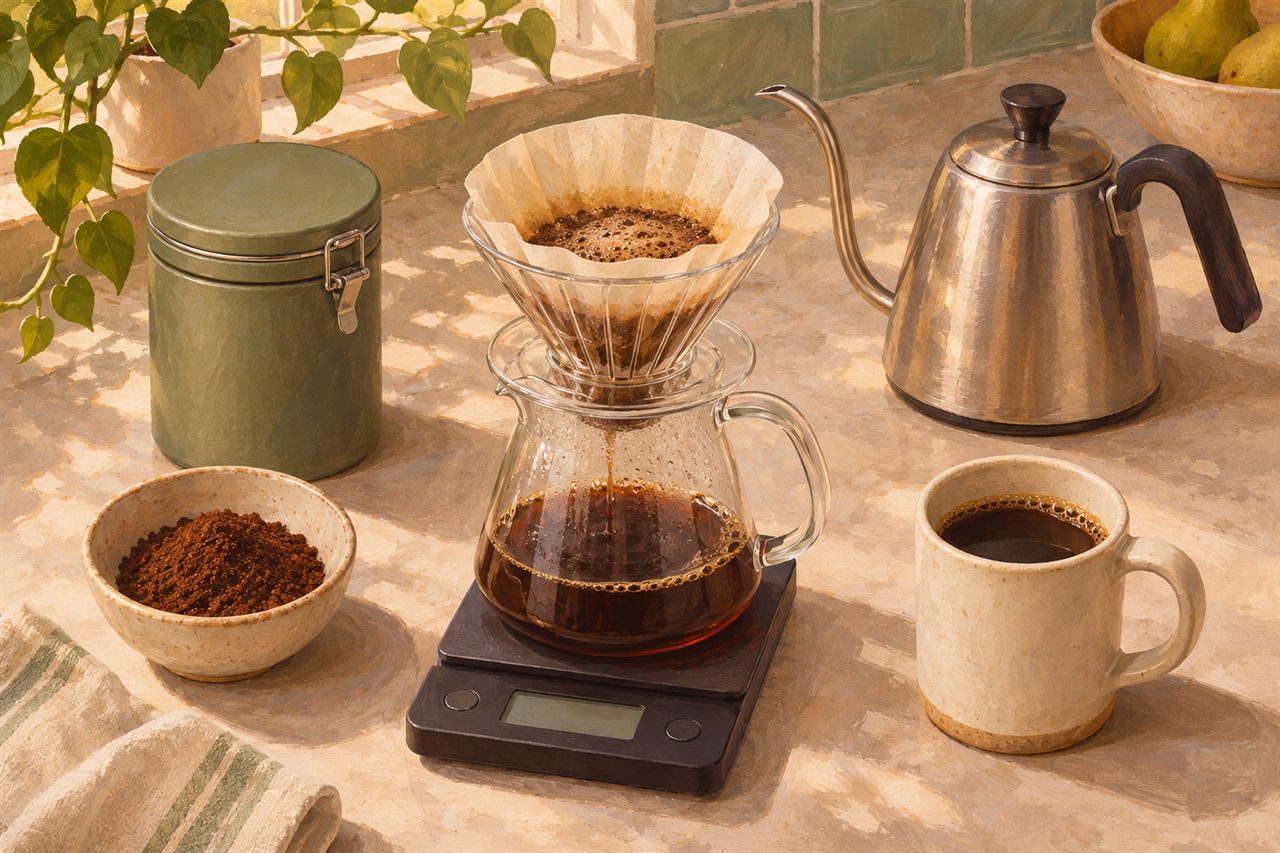
A scale makes a brew easy to repeat. Weigh the dry coffee and the water you add, then write down the ratio. The Specialty Coffee Association's discussion of brew ratios explains why recording coffee against the brewing-water amount helps you repeat and adjust a recipe. The useful ratio still depends on the method and the result you want. The NCA drip guide gives its own starting range, which illustrates why method matters.
If your cup is thin, try a little more coffee while holding the rest of the method steady. If it is simply too intense, a little less coffee or more water may suit you. Strength and extraction are related but distinct: a concentrated drink can still taste underdeveloped, and a dilute one can still have a harsh edge. The SCA's brewing-chart discussion explains that distinction in more detail.
Use the same mug or a measured water amount when comparing brews. A coffee maker's printed cup line may not match your household mug. If you change to a bigger serving without changing the coffee dose, the drink will naturally taste different. Keeping the water amount fixed makes troubleshooting easier.
Match the grind to contact time
Grind size changes how water moves through coffee and how much it extracts during the available time. Espresso generally uses a fine grind for a short brew; a French press uses a coarser grind for a longer steep. The NCA French press guide gives a method-specific starting point. Follow your brewer's recommendation before trying an arbitrary setting from another technique.
If a pour-over stalls and tastes harsh, the grind may be too fine for that filter and pour. If it runs through very quickly and tastes sharp or empty, a finer grind may help. These are clues, not diagnoses: water amount, temperature, pouring and the coffee itself also matter. Move the grinder one small step and repeat the same recipe. Keep a note of the setting because grinder numbers are not standardized across brands.
Buy pre-ground coffee if that suits your routine. Fresh grinding gives you control over size, but it adds equipment and cleanup. A good pre-ground bag matched to your brewer is better than a grinder you dislike using. If you change method often, a grinder becomes more useful. Check the grinder description for the range and adjustment style that suits your method.
Keep water and temperature consistent
Use fresh drinking water and follow the brewer's instructions for filling and heating. Pour-over and French press methods often specify a water temperature below a rolling boil; a drip machine controls its own heat. The NCA pour-over guide gives a starting temperature and timing range for that method. You can use a temperature-controlled kettle if you brew by hand often, but it is not a requirement for every coffee routine.
Water taste carries into the cup. If tap water has a strong taste, try a suitable filtered drinking water and compare the same coffee recipe. Avoid assuming that a specialty bottled water will solve a problem caused by stale coffee or an unclean brewer. Change the water alone for one test so you know what it contributed.
Preheating a ceramic mug or brewer can reduce the immediate cooling of a small serving. Empty the preheat water before adding coffee or the finished drink will be diluted. Handle hot water and glass with care and keep the kettle cord out of the way. A good routine is one you can repeat safely when you are still half awake.
Store coffee for the amount you actually drink
Buy a quantity you can use while it tastes fresh. The NCA storage guide recommends an airtight, opaque container in a cool place away from moisture, heat and light. A transparent jar can look attractive on the counter but exposes coffee to light. An oversized bag that sits open for weeks may be less satisfying than smaller purchases.
Keep the container closed between scoops and use a dry measure. The refrigerator is not automatically a better place for everyday beans: opening a cold container in a warm kitchen can create condensation. If you freeze a larger supply, follow the NCA's advice to seal it well and take out a manageable portion at a time. Label the purchase date so you know how long the bag has been open.
Different coffees and roasts will taste different even when brewed with identical settings. When you change bags, treat the first cup as a new baseline. Keep the same method and ratio, then adjust to taste. Our coffee storage comparison covers container features, although current product listings should always be checked before buying.
Use taste as a guide, not a verdict
Describe what you actually taste: thin, strong, sour, bitter, flat or simply unlike the coffee you wanted. Then identify the variable most likely to change that result. A thin cup may call for more coffee. A short, fast brew may call for a finer grind. A harsh cup that drains slowly may benefit from a coarser grind. These are starting experiments, not guaranteed fixes.
Compare two cups made from the same beans, water and method. Change only one factor, such as the grind setting or coffee dose. If the new cup improves, keep it; if not, return to your baseline and try something else. The goal is a cup you enjoy, not a number on someone else's ideal chart.
Do not rush into new equipment because one brew disappointed. Check the simple things first: was the coffee stored well, did you use the amount you intended, and was the brewer clean? If you make coffee for several people with different tastes, brew a consistent base and let each person adjust the finished drink. That is easier than trying to engineer one cup that suits everyone.
Common coffee questions
Should I grind beans every morning?
Grinding close to brewing gives you control over the grind and limits how long the grounds sit exposed, but it is optional. If a grinder adds too much friction to your morning, buy smaller amounts of ground coffee matched to your brewer and store them carefully. Consistency matters more than owning another appliance.
Why is my coffee sour?
A fast, underdeveloped extraction is one possibility, but the bean and roast can also have a bright flavor. Keep the coffee and water amounts the same and try a small grind adjustment. Compare with a second brew before deciding the cause. If you prefer a less bright profile, a different coffee may be the better change.
Can I use the same grind for French press and espresso?
Usually not. Their contact times and filters differ considerably. Start with each method's own guidance and adjust in small steps for your equipment. Grinder labels are only starting points; a setting called 'medium' on one machine will not necessarily match another.
What is the simplest way to improve consistency?
Measure the coffee and water for one recipe, keep the grinder setting and method fixed, and write down the result. Repeat before adjusting. Once you can reproduce a cup, small changes become meaningful and you can tell whether the next one is actually better for your taste.