Choose the storage method before the flavor
There are two different projects people often call "making preserves": a spread or chutney intended for refrigeration and a product processed for shelf storage. The first follows a refrigerator recipe and its stated storage period. The second needs a tested canning recipe and the specified equipment and processing steps. Do not slide from one into the other because a jar happened to seal as it cooled.
CDC's home-canning guidance says to follow safe canning instructions closely and warns that food can contain botulinum toxin without a visible, smellable or tasteable warning. A seal does not prove that the food inside received a safe process. If you cannot establish how a jar was prepared, do not sample it to check.
For a first shelf-stable batch, pick one tested recipe and make it exactly as written. University of Minnesota Extension recommends research-based recipes from the National Center for Home Food Preservation. That choice gives you a defined ingredient balance, container size, processing method and elevation adjustment.
Jam, preserves and chutney are different recipes
Jam usually contains crushed fruit; preserves often have pieces or small whole fruit suspended in syrup. The National Center for Home Food Preservation's jam guide explains how fruit, pectin, acid and sugar work together to form a gel. That balance affects texture and spoilage control. A low-sugar spread needs a recipe designed for its ingredients, not a casual reduction of sugar in a conventional recipe.
Chutney is a broader term. It can contain chopped fruit or vegetables, vinegar, sugar and spices, but not every combination is suitable for the same canning method. NCHFP's chutney guidance distinguishes cooked fruit chutneys that may be canned or refrigerated from fresh chutneys usually eaten soon after making. The name on the jar does not determine shelf stability.
If you want a particular flavor, find a tested version of that flavor rather than inventing a pantry-storage recipe. You can experiment more freely with a refrigerator preparation, provided you follow a safe recipe's refrigeration and use guidance. Keep those experimental jars out of the shelf-stable batch.
Do not improvise the safety-critical ratios
For canning, the quantities of fruit, low-acid vegetables, vinegar, water and other ingredients belong to the tested process. Adding extra onion, reducing vinegar or using a different jar size can change the conditions the process was designed for. Do not substitute one vinegar for another with unknown acidity. Even ingredients that seem minor can alter the acidity or heat penetration of a dense mixture.
The NCHFP apple chutney recipe is a concrete example: it specifies the ingredients, 5% acidity vinegar, jar size, headspace and processing times by elevation. Use its full instructions if making it. The brief list here is a reminder of what to check, not an alternative recipe or a processing schedule.
Similar caution applies to jam. NCHFP advises using tested recipes when replacing sugar with honey or using reduced-sugar pectin. The ingredients determine both gel formation and how the spread is processed. A different pectin packet can have different directions, so read its recipe rather than assuming the same boil time will work.
Set up the batch before the pan is hot
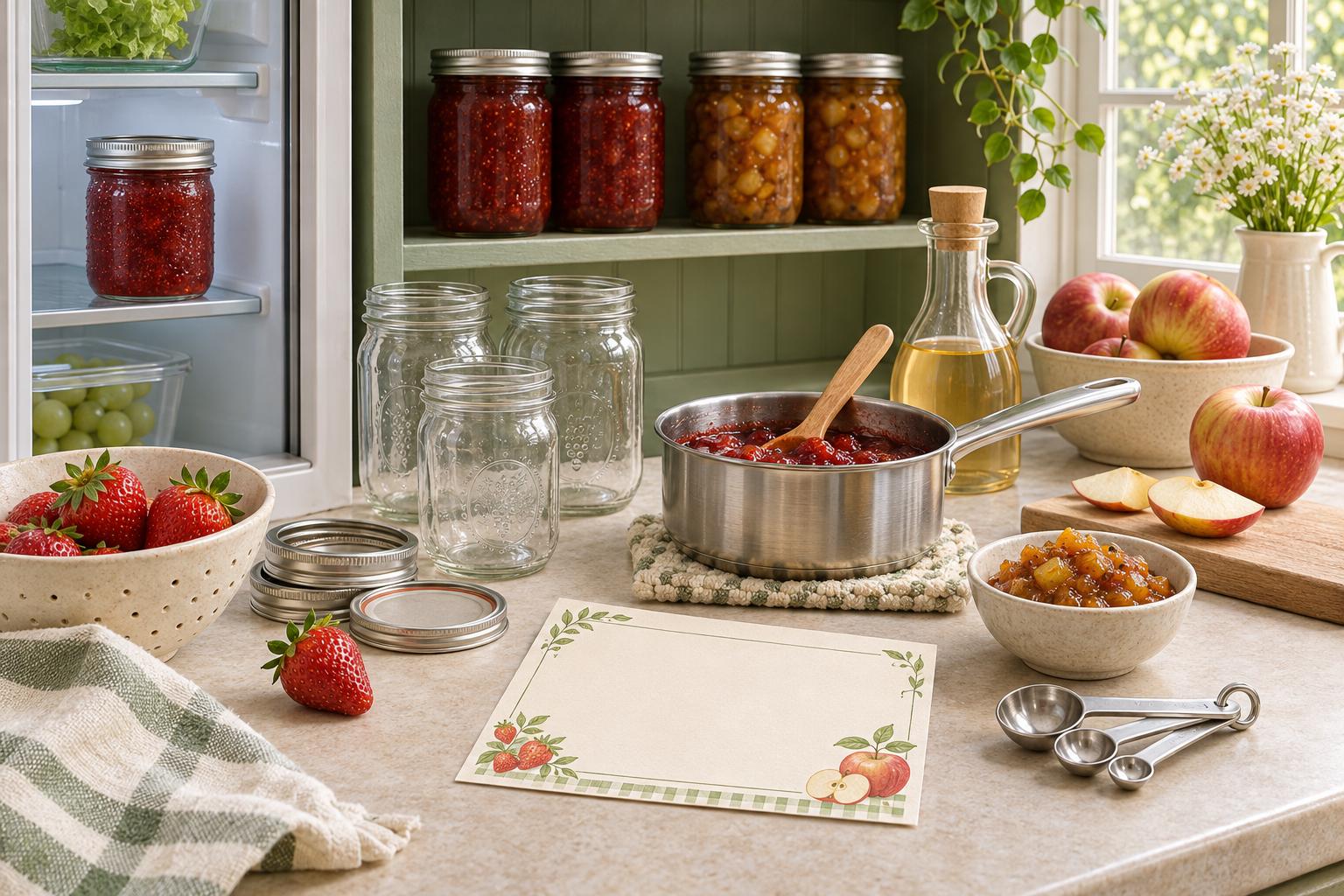
Read the whole recipe before cutting fruit. Confirm that you have the specified jar size, new lids where required, a suitable canner, a jar lifter and a rack. Check the equipment condition and the canner instructions. Measure the fruit and other ingredients separately; a rushed substitution is more likely once the mixture is boiling.
Prepare a clean, clear work area for filling and a safe place for jars to cool undisturbed. Work in one tested batch size. NCHFP notes that doubling jam batches can impair the set. For chutney, use the recipe's stated yield and vessel size. An apple peeler or chopper can save prep time, but cut pieces to the recipe's dimensions rather than processing them into a puree it did not call for.
Do not replace the recipe's processing stage with "hot fill and close." Follow the specified jar filling, headspace, lid handling, processing and cooling directions. Elevation can change the required processing time; use the table for your location in the actual tested recipe.
Know when pressure canning is required
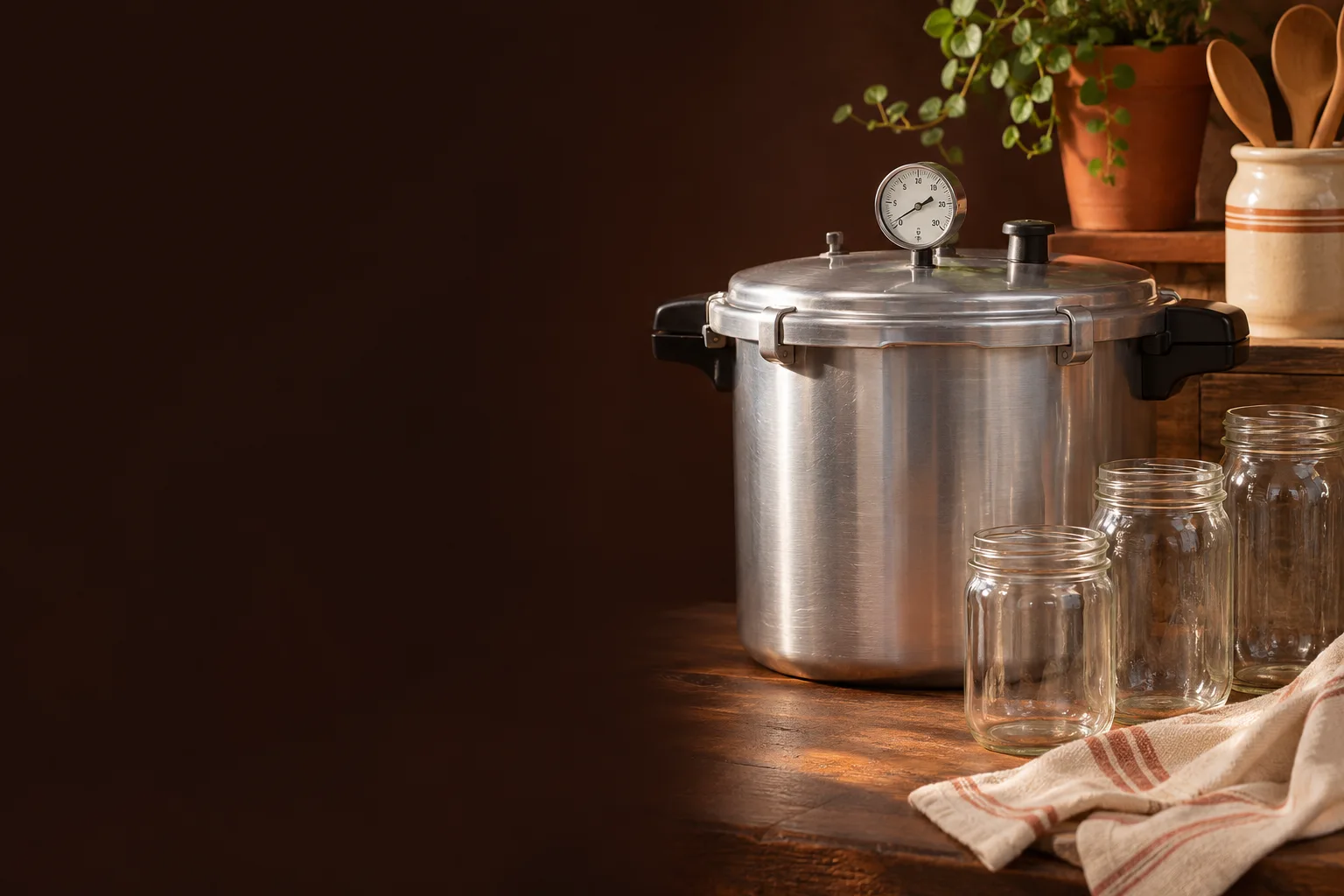
Some fruit-based preserves can be processed in a boiling-water canner under a tested recipe. Low-acid foods are different. CDC identifies pressure canning as the only recommended canning method for low-acid foods, including fresh vegetables, meat and some tomatoes. A boiling-water bath and an electric multi-cooker "canning" button are not substitutes for that method.
A chutney that contains vegetables does not automatically become safe because vinegar is present. Its safety depends on a tested formulation and process. For this reason, do not generalize the apple chutney method to an invented onion, pepper or bean chutney. Find a tested recipe for the actual ingredient mixture or keep a refrigerator version under its own instructions.
When in doubt about a jar that has already been made, do not try to rescue it by tasting. The CDC advises discarding food when safe canning steps cannot be verified. A pleasant smell, normal color or tight lid cannot establish safety.
Cooling, labeling and storage finish the process
After processing, follow the recipe authority's directions for cooling jars, checking seals and dealing with a failed seal. Do not retighten, invert or reprocess jars on a guess. If a seal fails, follow the same authority's specific correction or refrigerate and use the food within the advised period. A label cannot turn an uncertain jar into shelf-stable food.
Write the recipe name and preparation date on the finished batch. Store properly processed, sealed jars in the conditions the source recommends. Keep refrigerator recipes chilled from the start. Once a jar is opened, refrigerate it; University of Minnesota Extension's canning guide explicitly says opened canned foods need refrigeration.
Discard any jar that is leaking, bulging, spurting, moldy or otherwise abnormal, and do not taste it. CDC also warns that absence of those signs is not proof of safety. These habits are more important than a tidy row of matching jars on a shelf.
Plan a small, useful first batch
Choose a recipe for something you will actually eat: a fruit spread for breakfast, or a chutney for sandwiches and meals. Buy or harvest sound produce and check that its preparation matches the source's description. One tested batch gives you a chance to learn the equipment and the sequence without juggling multiple pans.
If you are only exploring flavors, a refrigerator recipe avoids the additional claim of shelf stability. If you want pantry storage, keep the tested formulation and processing method intact. Our apple preparation tools guide can help with repetitive peeling, and our vegetable preparation guide covers organizing the cutting work. Neither tool changes the safety steps.
Keep the source recipe beside the jars and record any non-safety notes, such as whether you preferred a finer fruit cut next time. For a different flavor, find a different tested recipe rather than changing acid, sugar, jar size or processing time on your own.
Preserving questions
Can I store a hot-filled jar in the cupboard if the lid sealed?
No. A lid that appears sealed does not show that the food received a tested canning process. Keep a refrigerator preparation refrigerated according to its recipe.
Can I reduce sugar in a regular jam recipe?
Use a tested reduced-sugar recipe or the instructions for a pectin designed for that purpose. Sugar affects the gel and preservation, and a casual reduction can change the result.
Can I add extra vegetables to a chutney recipe?
Do not alter a tested shelf-stable recipe's ingredient proportions. Find a tested recipe with the vegetables you want or make a refrigerator version with clear storage instructions.
Does a normal smell mean a home-canned jar is safe?
No. Botulinum toxin cannot be detected by smell, sight or taste. If the processing history is uncertain or the jar shows a problem, do not taste it.