
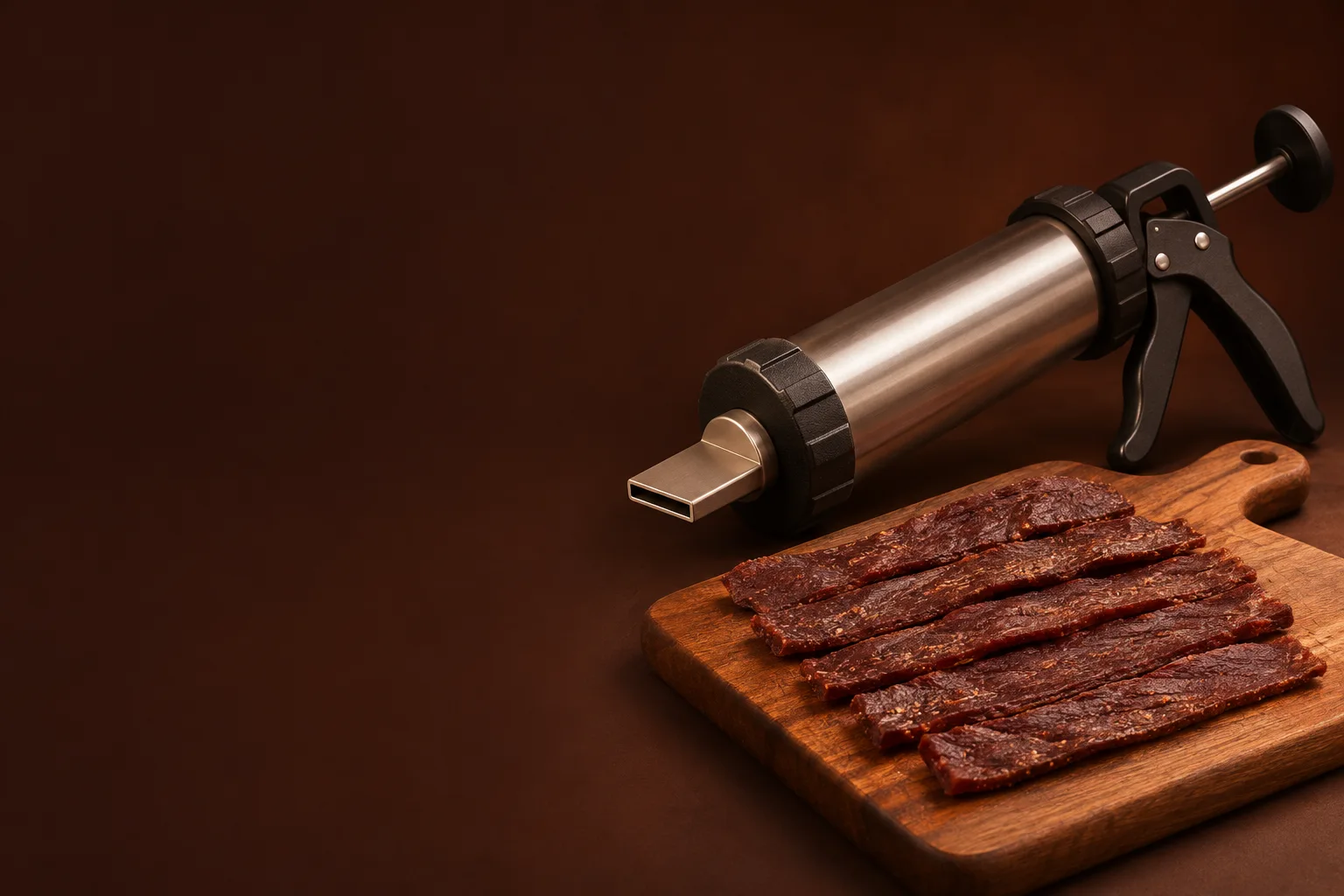
Start with a tested safety method
USDA's home-jerky guidance recommends heating meat to 160°F and poultry to 165°F before dehydrating. It advises checking several strips with a metal-stem thermometer and then drying in an appliance that maintains 130 to 140°F. Those are different measurements: one checks that the meat itself reached a safe heating point; the other describes the drying environment.
Why not simply put raw strips in a warm dehydrator? USDA explains that evaporation can keep meat cooler than the surrounding air. Bacteria may survive the drying stage, and a low appliance setting alone does not prove they were destroyed. Dry texture is not a substitute for a thermometer.
Choose one tested recipe and follow its sequence, strip thickness, heating method and drying instructions. The National Center for Home Food Preservation's safer-jerky publication gives a detailed home method. Do not combine parts of several recipes into an untested shortcut.
Prepare lean meat and a clean work area
Use sound, refrigerated meat and keep it cold until preparation. Trim visible fat because it can turn rancid during storage. Slice strips to the thickness in your tested recipe; thicker pieces may not heat or dry as expected. Partially freezing the meat can make even slicing easier, but thaw and handle it safely as the recipe directs.
Keep raw meat away from finished jerky, serving dishes and other ready-to-eat food. Wash hands, knives, boards and counters after raw-meat work. Use a separate clean tray for heated strips. USDA's jerky guidance calls for clean equipment and refrigeration during marinating; do not marinate on the counter or save used marinade for a later batch.
Choose a recipe that fits the equipment you own. A food dehydrator should have a temperature control and be able to maintain the required drying range. If you use an oven method, follow a tested oven procedure and check the actual temperature with an oven thermometer. Our dehydrator comparison can help you evaluate tray space and controls, but the product manual and recipe determine safe use.
Marinade adds flavor, not a safety guarantee
A marinade can add salt, spices, sweetness or acidity. It does not automatically make raw meat safe to dry at a low temperature. Keep the marinating meat refrigerated and follow the tested recipe's time and preparation steps. Do not reuse marinade that held raw meat unless a tested method specifically tells you how to handle it.
If you want less salt or a different flavor, find a tested recipe for that version rather than changing a safety method at random. The recipe's heating step must still be followed. Some published methods heat strips in marinade; others use a separate oven step. Timing and thickness matter, so do not infer that a quick simmer of a much thicker strip matches a tested procedure.
Pat or drain strips as instructed before loading trays. That reduces dripping and helps make the drying more even. Leave room between pieces so air can reach them. The dehydrator is a drying tool after the heating step, not an all-purpose replacement for it.
Measure the meat, then control the drying
Follow the tested method to heat several representative strips to the required internal temperature. Probe the thickest part with a thermometer suited to thin foods. A display on the dehydrator measures its air or setting, not the center of a strip. If the appliance cannot meet the recipe's required heating stage, use the specified separate equipment rather than skipping the stage.
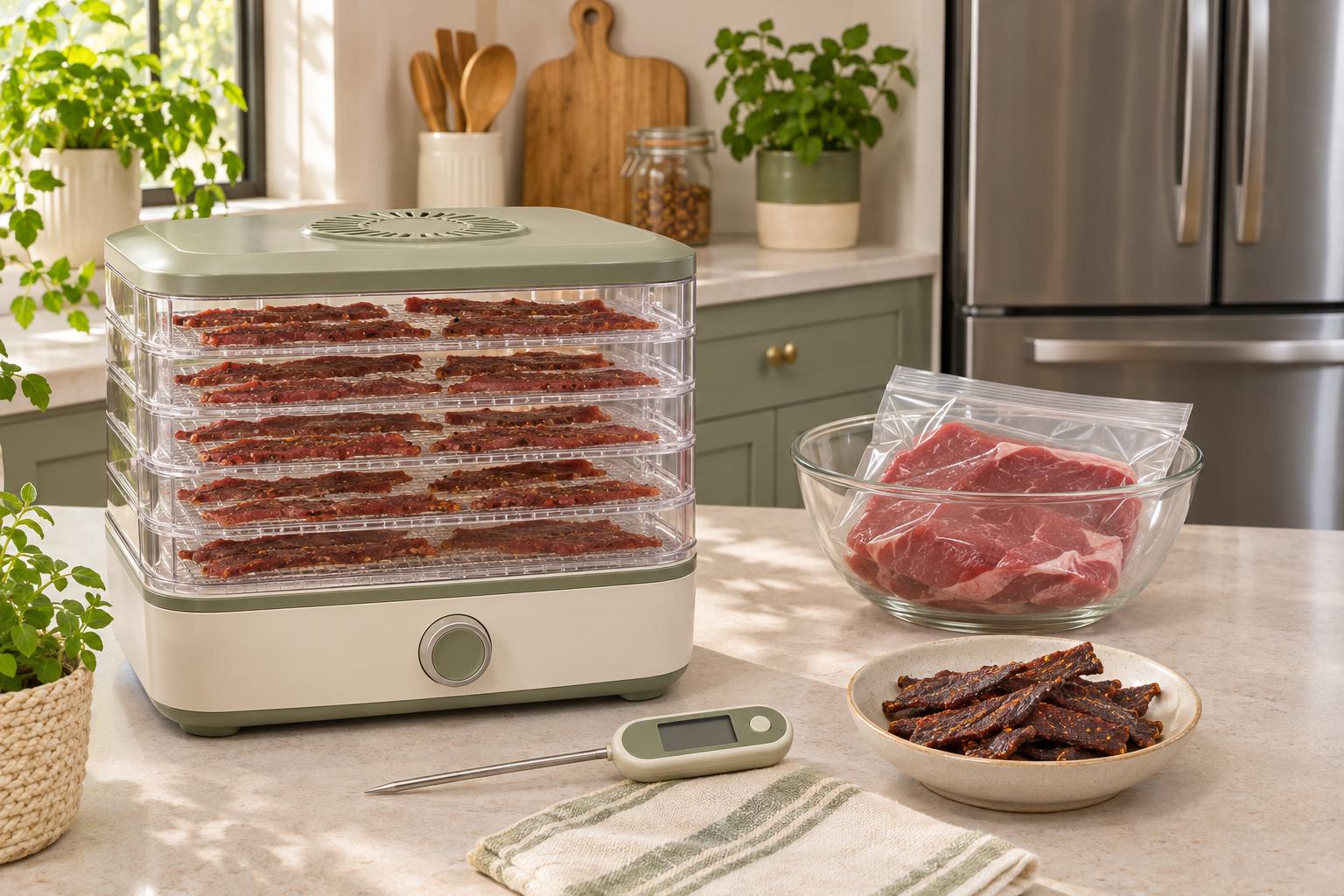
After heating, arrange strips in a single layer on the dehydrator trays. Do not overlap them. Set and monitor the dryer as the recipe directs; temperature at the food can differ from a dial setting. Rotate trays only if your appliance instructions call for it. Check progress without contaminating the finished food with tools used on raw meat.
Drying time varies with thickness, moisture, marinade and the dryer. USDA says to dry until a cooled test piece cracks but does not break when bent. That texture check tells you about dryness, not whether the meat previously reached a safe heating temperature. Both steps matter. Avoid declaring the batch finished just because the surface feels leathery.
Cool, package and store conservatively
Let the finished jerky cool as the tested instructions specify before sealing it; trapped moisture in a container can spoil quality. Package in clean containers that keep out moisture. Label the batch with its preparation date and the recipe used. If you see condensation, mold or an off odor later, discard the product.
Home storage advice differs with method and conditions. University of Minnesota Extension's drying guide recommends refrigeration or freezing for meat jerky. That is a prudent choice when you cannot verify the precise dryness and storage conditions of a home batch. Follow the storage period in your tested recipe and keep the packaged strips chilled if you are unsure.
Do not copy the shelf-life claim on a commercial package. Commercial jerky is made under monitored processes and may have different packaging. Our guidance assumes a home kitchen, not a validated commercial production line. If a batch was heated or dried outside the tested method, do not treat storage as a way to make it safe afterward.
Avoid three common shortcuts
First, do not rely on dehydrator temperature alone. A 140°F setting cannot demonstrate that raw beef reached USDA's recommended 160°F heating target. Measure the meat during the heating stage. Second, do not make strips much thicker than the recipe allows; the center and surface will behave differently. Third, do not package warm, moist pieces as though a dry-looking edge represents the whole batch.
Another tempting shortcut is to use a recipe found only in a social post without its source or method. Find the full publication from a food safety authority and follow the tested steps. If a recipe omits heating, target temperature or storage guidance, choose a better-documented one. The NCHFP drying FAQ is useful when checking claims about heating order and safety.
For other make-ahead kitchen work, our meat preparation guide covers separating raw and cooked stages. The aim is a repeatable process you can explain, not a collection of unmeasured tricks.
Questions about homemade jerky
Can I dry raw beef directly at 140°F?
USDA recommends heating meat to 160°F before dehydrating because the drying environment may not heat the meat enough to reduce pathogens. Use a tested method and measure the strips.
Does a dry, bendable strip prove it is safe?
No. The bend test helps judge dryness after processing. It cannot confirm that the meat reached the recommended heating temperature earlier.
Can I use an air fryer instead of a dehydrator?
Only if a tested recipe and your appliance manual support the complete heating and drying sequence. A short air-fry cook or low-temperature fan setting should not be assumed equivalent to a validated jerky method.
How should I store homemade jerky?
Follow the tested recipe's packaging and storage directions. Refrigerating or freezing home jerky is a conservative choice, especially when you cannot verify the exact dryness and conditions.