
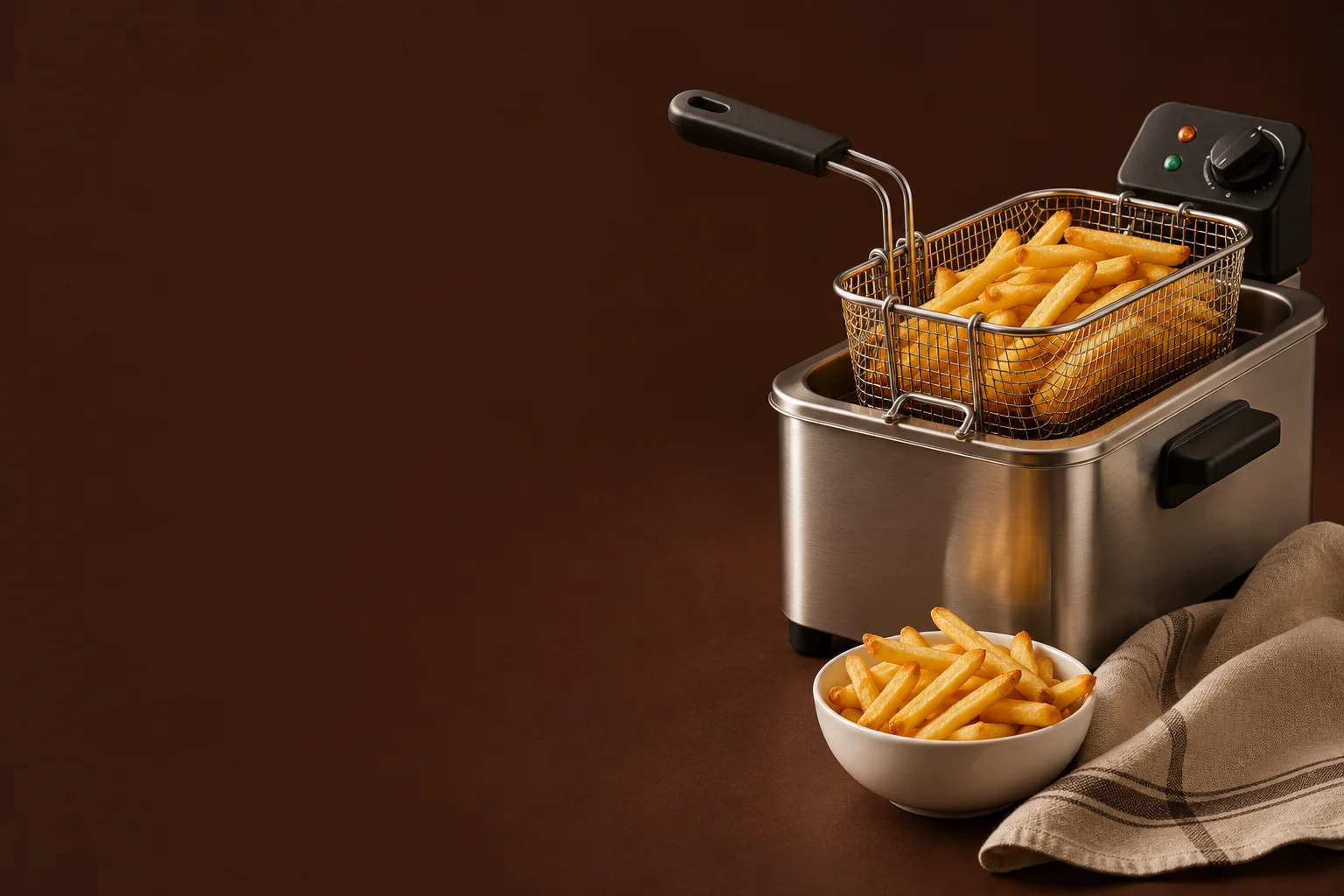
Hot air and hot oil do different work
Deep frying cooks by immersing food in hot oil. An air fryer uses a heating element and fan to move hot air past food in a basket or tray. These are different heat-transfer arrangements, even though both can produce browned surfaces. USDA's cooking-methods guide defines deep-fat frying by complete submersion in hot fat. The air fryer has no oil bath.
That distinction matters when adapting recipes. A battered fish fillet made for immersion frying depends on the hot oil rapidly setting its coating. A wet batter may drip through an air fryer's perforations before it firms up. A dry breading or a recipe designed specifically for air frying is a more sensible starting point. Our air fryer explainer shows why the basket and airflow matter.
The comparison is not a contest between a "healthy" machine and an "unhealthy" one. The food, recipe, portion and serving context still determine what you eat. An air fryer can use little added oil for one dish, while a deep fryer can make a very different dish that cannot be copied by changing the appliance alone.
Choose based on the food you want to make
For roasted vegetables, reheated pizza slices or frozen foods with package directions for air frying, a basket can be convenient. You can spread pieces out, check them during cooking and shake many small foods without lifting a pot of oil. For a traditional wet-battered item, the deep fryer is the equipment the recipe expects. Some foods can be made by either method, but they may require different coatings and timings.
Think through one specific favorite, such as fries. In a deep fryer, the potatoes are surrounded by oil. In an air fryer, the surfaces exposed to moving air brown while the pieces touching the basket or each other may need turning. The results can both be appealing without being identical. Do not promise your family the same texture from a direct recipe swap.
Batch size also changes the decision. A small air fryer may need several rounds to serve a group. A deep fryer also has a maximum oil level and a safe food load; adding too much can cool the oil or raise its level. Compare each appliance's permitted batch size and the number of runs your meal requires, not just its exterior dimensions.
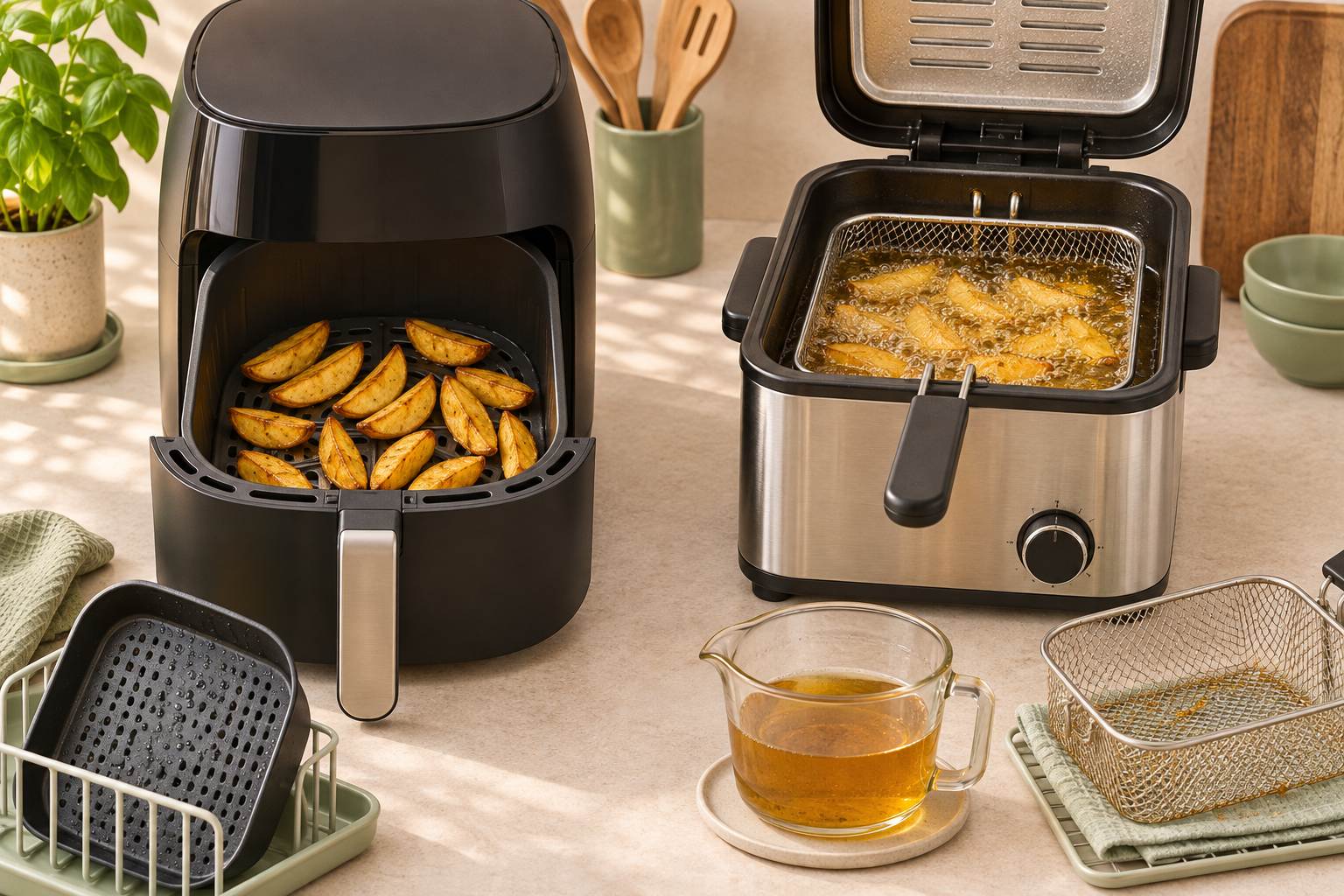
Hot-oil handling is the major setup difference
A deep fryer requires oil within the fill marks specified by its manual, a stable position and careful lowering and lifting of food. Splashes and hot surfaces can cause burns. Do not overfill, move or drain the appliance while the oil is hot. Keep children and pets clear of the work area. A countertop electric fryer and an outdoor propane turkey fryer are not interchangeable; outdoor units must follow their own location and use instructions.
The National Fire Protection Association's cooking guidance says to stay in the kitchen while frying, heat oil slowly, add food gently and never throw water on an oil fire. If a fire does not go out or you cannot safely handle it, leave and call emergency services from outside. The advice is a reminder that cooking attention matters more than a timer.
An air fryer avoids a bath of hot oil but still has hot metal, steam, grease and an electrical base. The basket can burn a hand and collected grease can smoke. Follow its manual for clearance, accessories and cleaning. Our air fryer mistakes guide covers common airflow and safety errors.
Oil quality and disposal are part of the meal
Deep frying leaves a significant amount of cooking oil to cool, filter, store, reuse or discard. Follow the fryer and oil manufacturer's instructions, and do not assume that every used batch remains suitable for another meal. Hong Kong's Centre for Food Safety explains that repeated heating changes frying oil and gives practical quality and temperature guidance. Signs such as unusual smoke, darkening or off odors call for caution, not another round of cooking.
Plan for the cooled oil before you start. Keep it out of the sink. US EPA household wastewater guidance warns that cooking oils and grease can clog pipes. Local collection, recycling and garbage rules vary; check your municipality for the appropriate route and container. Our cooking oil disposal guide helps you sort those options.
An air fryer may use a small coating of oil or none, depending on the dish, but it still accumulates drips and crumbs. Empty and wash the removable parts according to the manual once cool. Never immerse an electrical base in water.
A browned crust is not a safety check
Either method can make an exterior look cooked before a thick piece is safe inside. Oil temperature, air temperature and surface color are separate from the food's core temperature. Use a thermometer for meat and poultry, probing the thickest part without touching bone or a pan. FoodSafety.gov lists safe minimum temperatures by food, including 165°F for all poultry.
Keep raw foods separate from ready-to-eat items during preparation. Use clean utensils and plates for finished food. If you are making several batches, plan how to keep earlier food at a safe temperature rather than leaving it on the counter for an extended period. The cooking appliance does not replace basic kitchen handling.
When deep frying, the oil thermometer and food thermometer answer different questions. The former helps control the cooking medium; the latter checks the food. USDA's deep-fry thermometer note describes typical hot-oil temperatures, but a recipe and your appliance manual should govern the actual setting. Do not infer a safe center merely from the oil display.
Compare the full cleanup, storage and cost
An air fryer usually leaves a basket, insert and perhaps a drip tray to wash. A deep fryer leaves those kinds of parts plus used oil and an oil-contact interior. Some fryers include removable oil containers or filters, but those features do not make hot oil safe to handle before it cools. Read the cleaning instructions for the exact model and make sure you have somewhere to store any retained oil.
Counter space is another difference. A basket air fryer needs room for the drawer to pull out and ventilation around the body. A deep fryer needs a secure cooking position and safe space for cooling. Both need the clearance their manuals specify. Avoid a purchase based solely on the footprint of the appliance when the workflow requires a landing area for hot parts or a container for oil.
For an occasional meal, consider how often you would buy oil, how many batches you would cook and how much cleaning you are willing to do. If you already own one appliance, test a recipe written for it before buying another. Compare our small deep fryers and basket air fryers by usable capacity and maintenance details.
Questions about choosing a fryer
Can I put oil in the bottom of an air fryer?
No. A basket air fryer is not a deep fryer. Add only the amount and type of oil a recipe and your model's manual allow, usually on the food rather than as a pool in the drawer.
Will air-fried food taste exactly like deep-fried food?
Do not expect an exact match. Immersion in oil and circulating hot air set coatings and remove moisture differently. Choose a recipe developed for the method you use, then adjust within the appliance instructions.
Is air frying always lower in fat?
That depends on the ingredients and recipe being compared. A food prepared with little added oil may differ from a version immersed in oil, but a universal claim for every air-fried meal is not supported by the appliance alone.
Which is safer?
Both require attention. Deep frying adds a large volume of very hot oil and specific splash and fire risks. Air frying avoids the oil bath but still involves hot surfaces, steam and grease. Follow the manual, stay nearby and check food doneness.