
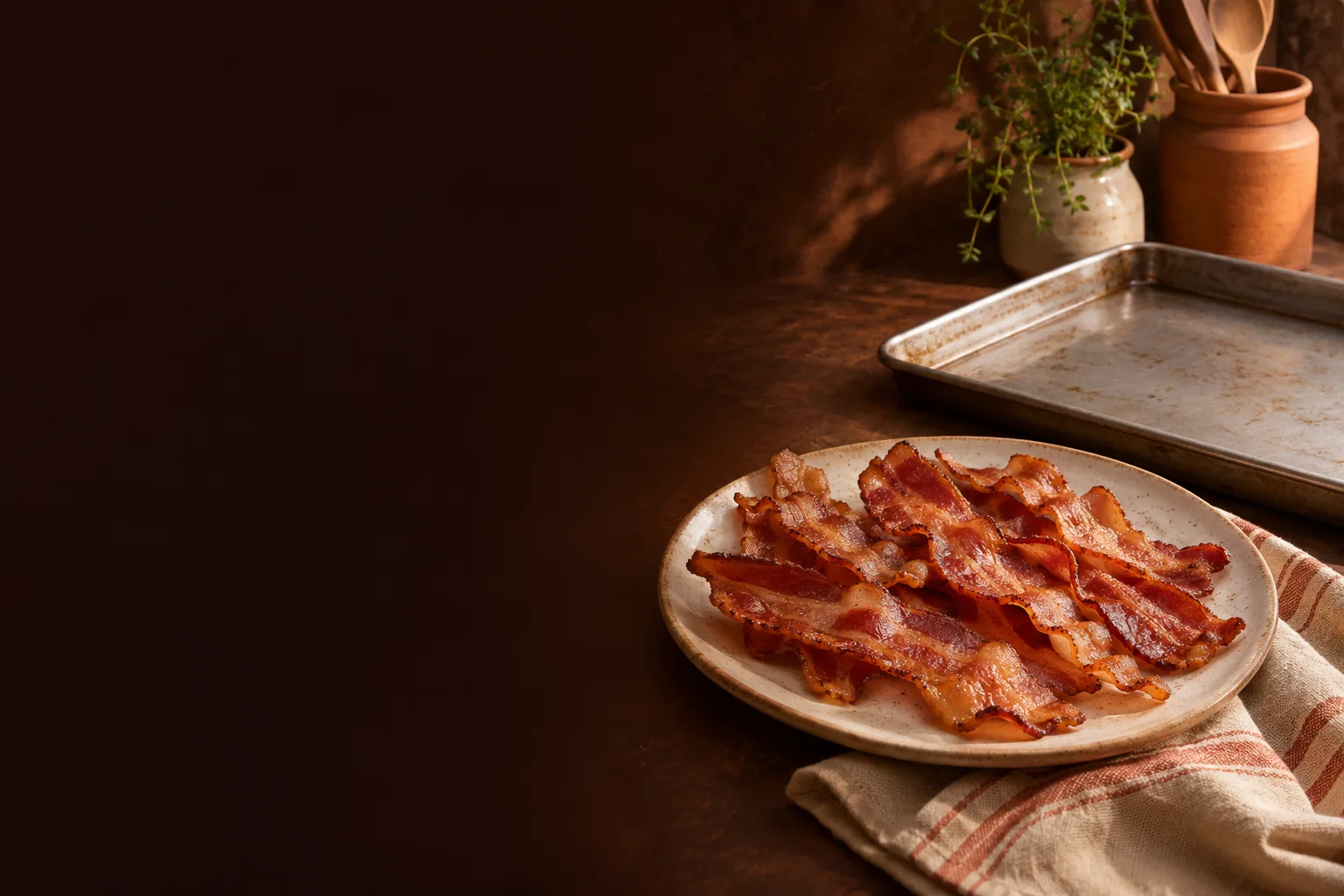
Start with your model's instructions
Air fryers differ in basket area, heater position, fan strength and grease collection. Check your manual for fatty foods and any manufacturer bacon recipe before setting a temperature. Ninja's support example uses four halved strips at 350°F for 8 to 10 minutes in a particular air fryer. That is an illustration of a model-specific method, not a universal schedule.
A different basket, a thick-cut package or a cold start can change the cooking time. The first run should be small enough to observe. If your appliance manual warns against cooking bacon or requires an accessory you do not have, use a skillet or oven instead. Do not improvise by pouring water or oil into the drawer.
Clear the counter space around the air fryer according to the manual. Make sure the basket and drip area are clean before starting. Bacon releases fat, and residue from a prior cook can heat and smoke. Our air fryer cleaning guide explains the parts that need attention after greasy foods.
Make a small, flat first batch
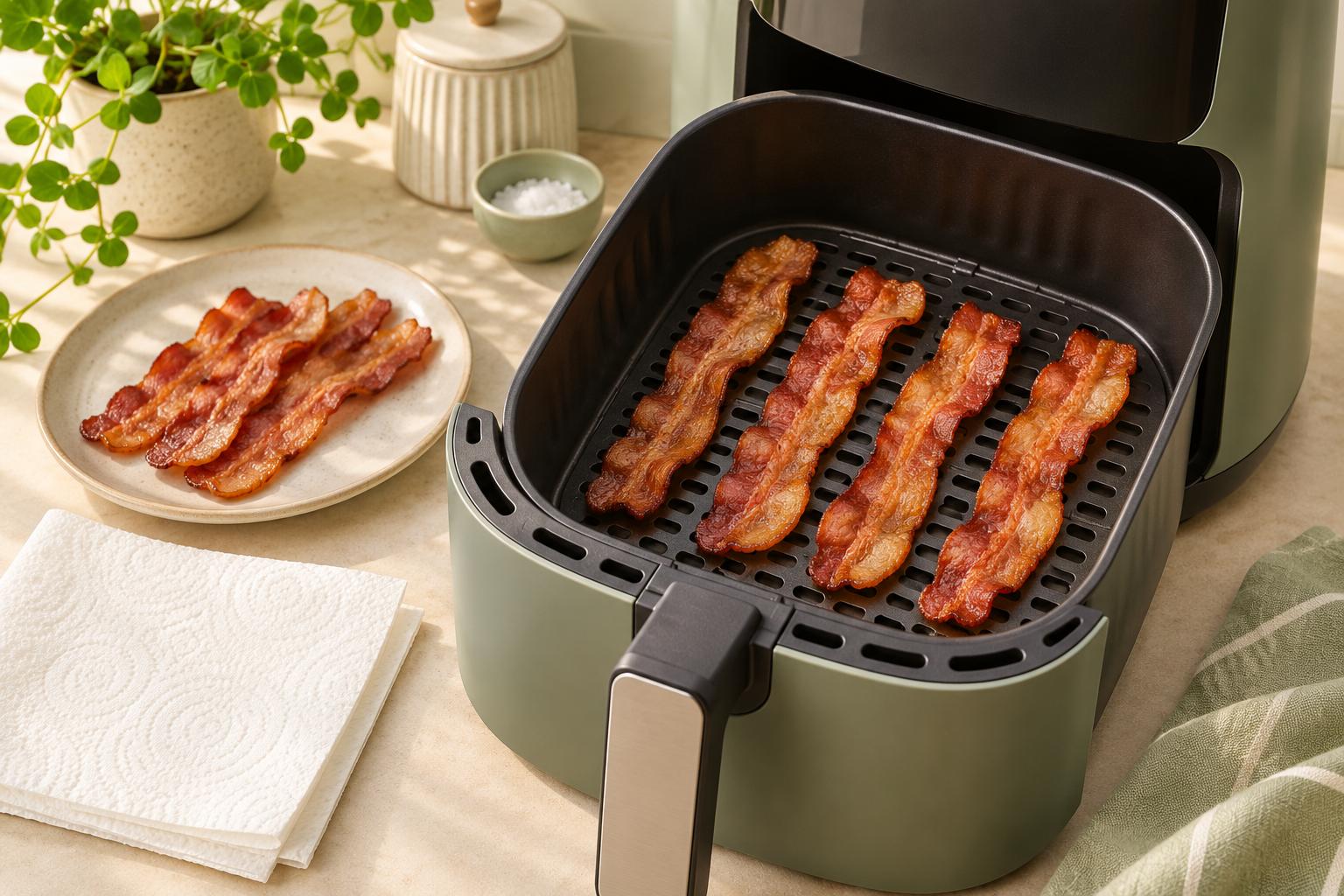
Take only the amount you plan to cook and return the rest of the package to the refrigerator promptly. Arrange strips in a single layer with enough room that the air can reach them. They may shrink and curl as the fat renders, but starting with a loose layout makes it easier to see what is happening. If whole strips are too long for the drawer, use the cut size allowed by your recipe or cook fewer at once.
Do not stack a large pile and assume extra minutes will reach the middle. For a second batch, the machine may already be hot, so the same timer setting can produce a darker result. Begin checking before the end of the suggested time and use tongs if the recipe calls for turning. Avoid touching the hot insert or placing the drawer on a surface that could be damaged.
Thin and thick slices do not behave like the same ingredient. A thin strip can dry out while a thicker strip still has soft fat; flavored or sugar-coated bacon can brown more quickly at the surface. Keep the first test batch plain and consistent so you can see how your machine handles it. For a flavored version, start with a recipe designed for that combination and watch for faster browning or drips. Avoid assuming the next package will cook identically because its label says bacon.
Our air fryer airflow explainer shows why the perforated basket and exposed food surface matter. A liner that blocks holes can change the cook and may be unsafe if it shifts toward the heater. Use only accessories your model allows.
Watch the grease and respond to smoke
Bacon can release enough fat to collect below the basket. Philips Airfryer support guidance explains that fatty ingredients or leftover greasy residue can cause white smoke and gives steps for removing excess grease. Another brand may have different parts and procedures.
If smoke develops, pause or switch off the machine and follow its manual. Do not reach into a hot compartment, add water to hot grease or assume every smoke event is harmless. If smoke is heavy, persistent or accompanied by flames, treat it as a fire risk. The National Fire Protection Association advises staying in the kitchen while cooking with oil and never throwing water on an oil fire. Leave and call emergency services if you cannot safely control a fire.
Prevention is easier than a smoky rescue: clean the basket and pan before use, avoid overcrowding and monitor the first batch. Do not put unapproved bread, foil or a paper liner in the basket merely to catch grease. A catching method must be specifically permitted for your machine.
Judge the cooked bacon and handle it cleanly
Remove strips with clean tongs and set them on a heat-safe plate. Cook until the bacon is thoroughly done for the product and your intended use; do not eat it raw. Crispening continues briefly after removal as fat cools, so checking a little early can prevent a brittle result. If a strip is still underdone, return it in short increments while watching closely.
Keep cooked bacon separate from plates or utensils that held it raw. The cooking surface and tongs are hot, and the rendered fat remains hot after the timer stops. Let the drawer and grease cool according to your manual before cleaning or transferring fat. Do not pour a pool of bacon grease into the sink.
FoodSafety.gov's cold-storage chart gives refrigeration guidance for uncooked bacon. For cooked leftovers, follow general leftover handling guidance and refrigerate promptly in a covered container. Reheat only what you need, rather than repeatedly warming the same batch.
Clean the basket and dispose of cooled fat
After the air fryer has cooled, remove the basket and any insert as your manual directs. Empty the collected fat into a suitable container once it is cool enough to handle, then wipe the remaining film before washing. Do not immerse the electrical base or use abrasive tools on a nonstick coating. Check for grease around the heater only by the safe method the manual permits.
For disposal, local rules differ. Our cooking oil and grease guide explains how to keep fat out of plumbing and choose sealed trash or an authorized collection program. It applies to bacon fat as well as liquid vegetable oil. A few drops left in the drawer can become the residue that smokes during the next cook.
If you frequently cook bacon, compare the full workflow with a skillet or oven sheet pan. The air fryer may be convenient for a few strips, while a wider pan may suit a larger meal with fewer batches. The useful choice includes cleanup and smoke management, not just the minutes displayed on the machine.
A repeatable first-batch checklist
- Read the model manual and a compatible bacon recipe.
- Clean the basket and grease-collecting area.
- Arrange a few strips in one loose layer.
- Set the model-specific cooking mode and check before its suggested finish time.
- Use clean tongs to remove thoroughly cooked strips.
- Let the machine and fat cool before disposal and cleaning.
Write down the strip thickness, amount, mode and outcome. On a later batch, change one factor at a time. This is more reliable than borrowing a time from a different appliance and treating it as a guarantee.
For more general habits, see our air fryer cooking tips and common mistakes guide. Both explain why load size and watching the food matter.
Questions about air fryer bacon
What temperature should I use?
Use the temperature in a recipe approved for your model and the bacon you have. Manufacturer examples vary; begin with a small test batch and check it before the stated finish time.
Can I cook a whole package at once?
Only if the strips fit in the layout and quantity your appliance permits. A crowded stack can cook unevenly. Several smaller batches may work better.
Why is my air fryer smoking?
Rendered fat or old grease residue may be heating in the pan. Stop and follow your model's instructions. Heavy smoke or flames require fire-safety action, not a recipe adjustment.
Can I line the drawer with paper to catch grease?
Use only liners or accessories the manufacturer approves for your model and place them as directed. A loose or solid liner can block airflow or move toward the heater.